Abagility Maths Club is an early childhood learning programme offering classroom and online tuition to children from 4 years up to adults on how to use the Japanese Soroban (abacus) to enhance their mental arithmetic skill. Abacus maths is a practical, concrete and visual method ultimately leading to exceptional mental arithmetic skills.
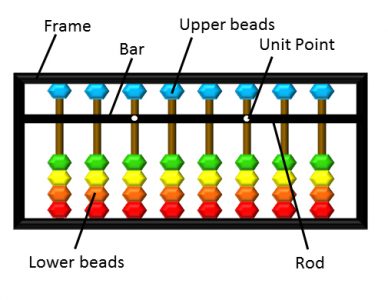
The skills are taught through the use of a Japanese Soroban, known in South Africa as an abacus. The beads on the abacus are used to represent numbers and the children use these numbers to perform calculations by moving the beads up and down with their fingers. The children are taught to break down numbers into components. Instead of traditionally memorizing maths facts the children continuously manipulate the numbers by breaking them down into these components. They learn to understand how the pieces fit together and in turn visualise not only the process but also the results of their calculations. This creates a deep fundamental understanding.
Our abacus maths programme teaches children to calculate accurately and speedily making the process of learning more satisfying for the child and boosts their confidence. The results seen from the children are phenomenal and have shown to increase children’s understanding of arithmetic, and quite substantially improve their results across all areas of learning.
Ultimately, Abagility Maths Club provides children with arithmetic and mental arithmetic skills, which can be applied in their day to day lives, and which gives them a strong foundation in mathematics.
It is Abagility Maths Club’s vision to provide a unique learning experience which makes a difference in the lives of our students through sharing the timeless Japanese technique of mental arithmetic with care, passion and excellence whilst innovatively aligning our curriculum to modern schooling. It is our dream to enthuse one child at a time until we have a nation of inspired, self-confident and mathematically skilled children.
Abagility Maths Club is a local company established in KZN by Tracy Hauptfleisch. Tracy, an MBA Graduate and mom, aware of the educational struggles in South Africa, wanted to ensure that her children developed into balanced, educated and successful individuals who would be able to “think out of the box” and one day become entrepreneurs.
In 2009, she identified a Japanese abacus maths programme that she felt would make a massive difference to the development of not only her own children, but to all other children out there as well. Tracy was so inspired by this alternative method which helped children to understand and grasp maths so easily, that she threw herself into learning this new skill so that she could share this knowledge with others. Tracy and her passionate team started teaching the skill in April 2009 in the Upper Highway Area. It quickly spread to other areas in and around Durban and she had to grow her teaching team to accommodate more children.
Tracy had felt for a long time that value could be added to her students learning experience on the Japanese abacus by bridging it with school maths. She wanted to introduce a programme which not only gave children the advantages that a Japanese abacus maths programme offered, but that also included learning material and problem solving in alignment with school type maths. She chose to create her own programme to do just that, and launched the Abagility Maths Club programme in January 2015. This customised and well-rounded programme bridges the gap between children knowing the Soroban skill and using it in their daily school maths experiences. The programme is able to benefit all children whether they are left or right brained, or good at maths or not.
Your child will start on the Fun-Abagility (fundamental) level. This programme includes a lot of practical, fun tools for learning and provides a very strong foundation for pre-schoolers. When your child has completed the Fun-Abagility level they will move onto Junior Abagility and once this level has been completed they will move on to Advanced Abagility.
Learn numbers 0 – 10 using concrete learning of the number value and number concept and the introduction to the abacus.
Your child will start with the Junior Abagility level. When your child has completed the Junior Abagility level they will move onto Advanced Abagility.
Levels 1 – 6:
Learn the basics of the abacus, which includes the rules on how to add and subtract bonds of 5 and 10, leading to double and triple digit addition and subtraction, multiplication and division tables are introduced.
They will start with the Senior Abagility level. When your child has completed the Senior Abagility level they will move onto Advanced Abagility.
Levels 1 – 6. Learn the basics of the Japanese abacus. Learning includes the 5 fundamental rules for addition and subtraction. Learn your multiplication and division tables and have fun with sudoku, brainteasers and other stimulating brain development activities.
Levels 1 – 6. Learn the basics of the Japanese abacus on our fast paced “Accelerate” programme. Learning includes the 5 fundamental rules for addition and subtraction. Learn your multiplication and division tables and have fun with sudoku, brainteasers and other stimulating brain development activities.
The Advanced Abagility programme consists of 10 levels, starting from 10th Kyu and moving up to the most advanced level, being 1st Kyu.
These Kyu’s cover multiplication, division, addition and subtraction on the abacus as well as advancement on the school type maths. Each level develops and grows from each previous level.
Whilst working through the Kyu’s, they will learn to do more advanced mental maths starting from the addition and subtraction of double digit numbers and moving onto triple digit addition and subtraction. They will also learn to multiply and divide more complex sums mentally, starting from 2 digit x 1 digit and 3 digit ÷ 1 digit moving up to eventually being able to mentally calculate 2 digit x 2/3 digits and 4/5 digits ÷ 2 digits.
Classes are small with a maximum of 6 children per instructor in person and 4 online.

Learn the basics of the Japanese abacus on our fast paced “Accelerate” programme. Learning includes the fundamental rules for addition and subtraction, multiplication and division on the abacus and other stimulating brain development activities like Sudoku, Futoshiki, Brain Teasers, Puzzles and much more. Multiple parts of the brain are activated when taking part in learning the Japanese Abacus method. It has been proven that keeping your brain active as you age can lead to improvement in global cognitive functions.
The part of short-term
memory which is concerned with immediate conscious perceptual and linguistic processing.
The ability to adapt thinking
and shift attention between different tasks or
perspectives.
The capacity to plan
ahead, meet goals, display
self-control, follow multiple-step directions even when interrupted, and stay
focused despite
distractions.
Example: drawing ability, construction of models and assembling of unassembled furniture that arrives
in a box.
Recalling and manipulating images to remain oriented in space and keep track of the location of moving objects.
The mental manipulation of quantitative information.
I originally started with Abagility classes so that I could help my daughter when she got stuck with Abagility homework. It has been a great learning experience for me, and it has been so much fun to be part of a group of adult learners. Abagility has really challenged my mind to think differently about numbers and maths. I also feel as if my mind has “woken up” again which feels good. The workbooks break down the learning material in such a way that it is easy to understand and learn the different rules and then apply them accordingly. Tracy (our teacher) has been very patient and encouraging with us but has also pushed us where needed to ensure we are learning and improving our Abagility skills every week. I have completed the first part of the course (up to level 6) and I am definitely going to continue with the higher levels as well.
Sonja
I’ve really enjoyed the challenge of Adult Abagility. But it’s not only challenging, it’s fun. I started it to strengthen my maths and keep my brain sharp, and that’s what it’s doing. I’m very pleased with how it’s making me use my brain in new ways. Doing it online is really convenient, too, and Tracy is a very patient, helpful and thorough teacher.
Dermott
Approaching my mid-30s, the terrifying prospect of losing my knack for picking up new skills loomed overhead like a dark cloud at a picnic.
When I signed up for this course, I was convinced I’d sooner learn to juggle flaming swords than figure out how to use an abacus missing half its beads and lounging like it’s on vacation.
But lo and behold, crunching numbers on this ancient contraption not only makes sense now, but it’s got me questioning why we ever swapped it out for those fancy-schmancy calculators.
Tracy, bless her abacus-wielding soul, has been a beacon of enthusiasm throughout. Her passion for Abagility is infectious, like a highly contagious case of mathematical joy.
And guess what? Turns out my brain’s not as dusty and obsolete as I feared.
Bring on the challenges, I say! Abagility, you’ve won me over, one bead at a time.
Ashleigh
This fantastic ONLINE programme allows you to learn all your times and divide tables at your own
pace in your own time in the comfort of your home!
It is a fun and interactive way to becoming competent and confident with your tables!
We supply online flash cards for visual learning and each lesson guides you through the journey!
If you want to master your times and divide tables, this is the way to go!

History of the Japanese Soroban
In the 15th century the Chinese abacus, known as the Suanpan, was introduced to Japan. During the late 19th century the Suanpan was modified and improved on by Japanese mathematicians who changed it into a more efficient calculating tool which was smaller in size and easier to use. This became known as the Japanese Soroban and is the abacus still used today.
The Soroban became a popular tool in the mid 20th century. It was a simple and convenient tool allowing people to carry out calculations mentally and by hand, achieving speedy results rivalling modern calculators.
In 1938 the Soroban technique was introduced into the Japanese school curriculum. Due to its many benefits, the Soroban technique is still taught today in modern day Japan.
Due to the popularity of the Japanese soroban maths technique and the immense advantages it gives children in their mathematics and other areas of learning the technique is being taught in numerous countries across the world such as; Japan, China, India, Russia, USA, Australia, UK, New Zealand, Singapore, Taiwan, Thailand, Malaysia, Vietnam, Turkey and of course South Africa.
Children who become skilled in the use of the Soroban become astoundingly skilled at mental maths calculations known as “anzan” in Japanese.
The Abacus & Brain Development
There are two hemispheres to our brain i.e. the left side and the right side. In general people tend to predominantly use more of one side of their brain than the other. As most people are right handed, they tend to use the left side of their brain as the right side of the body leads to more stimulation of the left brain cells. The right and left side of the brain is each a cognisant system in its own right and responsible for different functions of the mind.
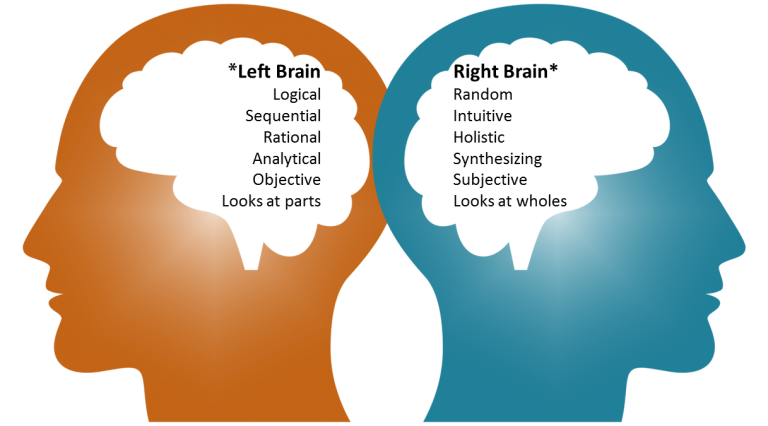
The left side of the brain has the ability to do the following:
The right side of the brain focuses on more creative aspects and needs to be well stimulated. It has the ability to do the following:
Although each person predominantly uses one side of their brain, all brain processes still take place in the whole brain. The brain is very flexible and can be stimulated by various means. Whole brain integration means that by using both sides of your brain you can improve the productivity of your brain. Of these various means, the one well known activity stimulating both sides of the brain by means of brain exercise, is the abacus.
Children who are trained in using the abacus, actively use their right brain. They use their hands to move the abacus beads in calculations, and in this way, stimulate the cells in both the right and left sides of the brain. The result is a balanced whole brain development, leading to greater mental capacity.
Scientific analyses indicate abacus training can improve a child’s ability to: